

It was incredibly quiet sleeping in the 500+ year old Convent of the Chagas de Cristo and is now the Pousada D. Joao IV. A pousada is an inn located in a historic building such as a castle, monastery or convent, and it was fun to wander the halls and take in the centuries of history.
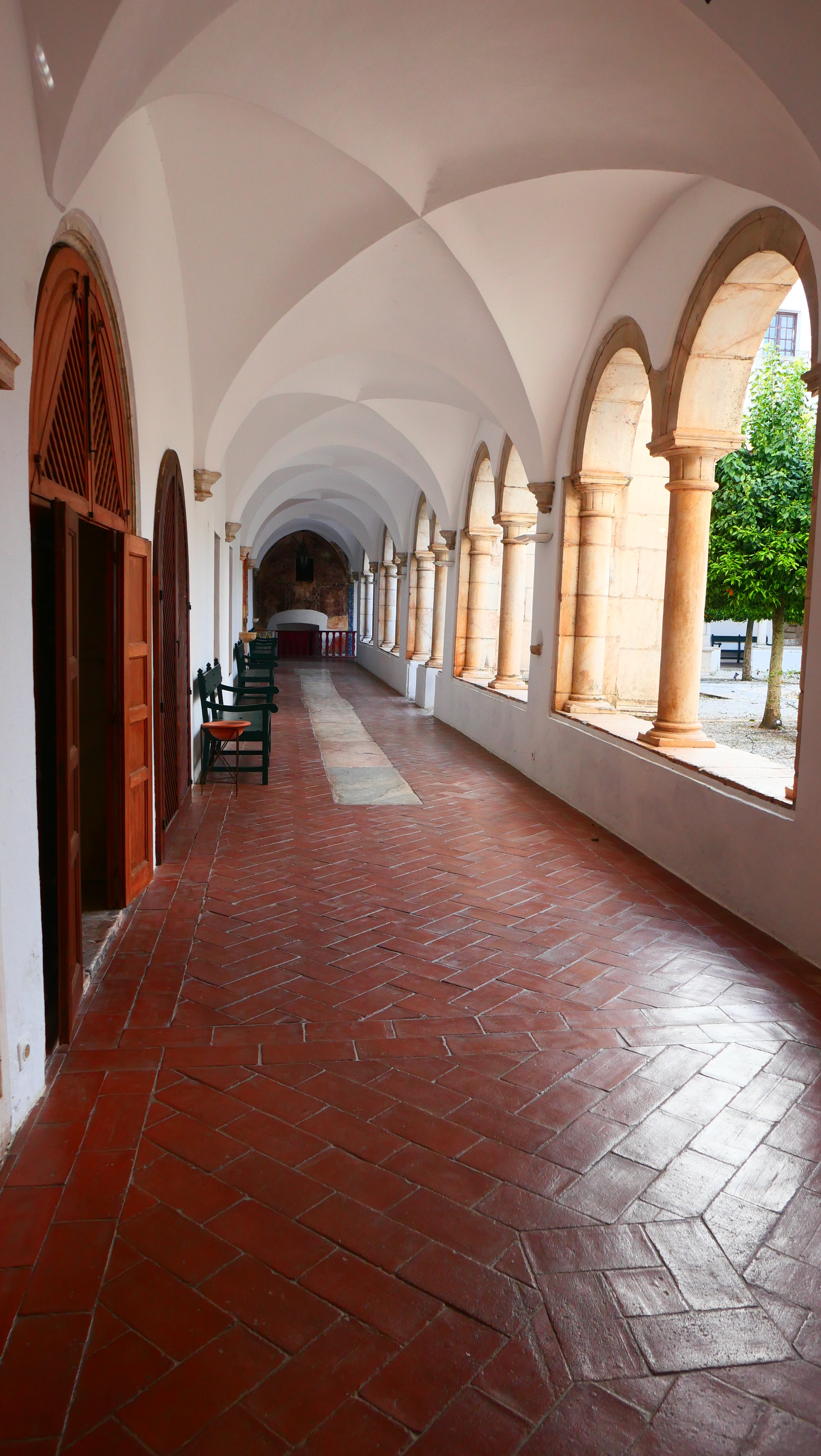
We had time in the morning before breakfast to wander through Vila Vicosa, settled by the Romans and later the Moors, then becoming a village in the 13th century with a castle that was key to defending this area through the centuries.


Behind the castle is an amazing cemetery constructed from local marble.


In the 15th century Vila Vicosa became part of the Duchy of Bragança and the Ducal Palace, right next to the convent where we stayed, was built.

We're staying at hotels with a buffet breakfast, and really enjoying a European breakfast with a variety of local breads, cheeses, ham, amazingly sweet fruit, freshly squeezed juices, and always sampling the pastel de Nata, a Portuguese custard tart originally made by monks with the recipe still closely guarded.
We only had about 70 miles to ride today, and the bulk of the roads were quiet, narrow barely-two-lane paved roads through agricultural areas. This meant we had time to wander through more castles and climb fortified walls. First up was the aqueduct and fortified walls around the city of Elvas.


We rode up to one of the gates into the fortification and then walked around some of the walls to really take in the size and scope of the building and its commanding presence on top of a high hill.


From Elvas we rode a short distance to the Forte de Graca, part of the defense system for Elvas and a UNESCO World Heritage Site.


We admired the numerous defense systems including inner and outer walls, slots for cannons, a moat, and 'manholes' - disguised holes where enemies would fall in. We especially liked the sentry stations on the edges of the wall.

We then rode another hour to Monsaraz, our final destination. Along the way we enjoyed more curvy roads and seeing sheep, goats, horses, cattle and pigs.


Every now and then we would ride on extremely narrow, cobblestone streets in rural towns, waving to the friendly townspeople.

We also passed fields with bright green grass and a multitude of colors of flowers. What we didn't see was a lot of traffic.


When Monsaraz, a walled medieval village with an absolutely gorgeous church, extremely steep and narrow stone streets, and a castle came into view, we couldn't resist stopping for photos.

We're staying at Estalagem Monsaraz, or the Inn at Monsaraz, a very old inn with low doorway ceilings (Mike has to duck), orange trees in the garden with ripe oranges that we couldn't resist sampling, and views over the city wall.


Tomorrow we ride into Spain, heading to Cordoba. More adventures await~


